SEO services typically cost between $1,500 and $5,000 per month, but rates can range from as low as $100 to over $30,000 depending on your needs. Here’s a breakdown of the most common pricing models:
Hourly Rates: $100–$300/hour, ideal for short-term tasks or consultations.
Project-Based Pricing: $1,000–$5,000+ for specific deliverables like audits or campaigns.
Monthly Retainers: $500–$10,000/month for ongoing SEO and long-term growth.
Factors that influence pricing include business size, project scope, agency expertise, and location. For example:
Startups: $750–$1,500/month
Small businesses: $1,500–$3,000/month
Medium businesses: $1,500–$5,000/month
Agencies charge about 30% more than freelancers, and U.S.-based services are 3–5 times more expensive than those in emerging markets.
Pricing Model
Cost Range
Best For
Hourly
$100–$300/hour
Short-term tasks, consulting
Project-Based
$1,000–$5,000+
Specific, one-time deliverables
Monthly Retainer
$500–$10,000/month
Long-term SEO growth
SEO is a long-term investment, with most businesses allocating 5–10% of their marketing budget to it. Choose the pricing model that best fits your goals and budget.
SEO Pricing Cost Guide 2025
1. Hourly Pricing
Hourly pricing is all about paying for the exact time spent on your SEO tasks. It’s a flexible option that works well for short-term, targeted needs.
Cost Range
The cost of SEO services by the hour can vary widely, depending on the provider’s experience and specialization. Most agencies charge between $100 and $149 per hour, with the average hovering around $115.61 per hour, according to an analysis of 350 SEO agencies. However, these rates can climb higher for seasoned experts.
Here’s a breakdown based on experience:
Entry-level professionals (1–3 years): Below $50 per hour
Mid-level professionals (4–6 years): $50–$100 per hour
Senior experts (7+ years): $101–$150 per hour
Veterans with extensive expertise: Over $150 per hour
On average, hourly rates increase by $15–$25 for each additional year of experience, up to the 10-year mark. Local market factors, such as higher costs in the U.S., can also influence these figures.
The type of SEO service also impacts pricing. For example, SEO content creation and local SEO services generally fall in the $100–$149 per hour range. Meanwhile, services like link building, technical SEO, and on-page optimization often come in lower, around $25–$49 per hour.
Best Use Cases
Hourly pricing is ideal for businesses that need expert help with specific tasks rather than ongoing, full-scale SEO management. Here are a few examples:
Technical SEO audits: Perfect for diagnosing crawling issues or fixing site architecture problems.
Strategy consultations: Great if you need an expert to review your SEO plan, pinpoint gaps, or provide actionable recommendations for your team.
Short-term tasks: Activities like keyword research, competitor analysis, or team training can be handled efficiently on an hourly basis.
This model shines when your needs are focused and well-defined, allowing you to tap into professional expertise without committing to long-term engagements.
Client Commitment Level
One of the biggest advantages of hourly pricing is its low commitment. It’s a great way for businesses to test the waters with SEO services. For example, you could hire an agency or freelancer for 10–20 hours of work to evaluate their skills before deciding on a deeper partnership.
That said, this model has its limitations. Without a consistent strategy, hourly pricing may lead to fragmented efforts and unpredictable costs. Additionally, clients may sometimes question the time billed for specific tasks, as noted by Mary Carroll, Managing Director of Partnerships at Archer Education:
"A drawback to this pricing model is it can open up an avenue for clients to begin scrutinizing the amount of time billed for certain work. Many times, this can be solved with some additional client education, but that will depend on the client-agency relationship." – Mary Carroll
Hourly pricing works best when your SEO needs are specific and limited in scope, rather than aiming for broad, long-term growth. Up next, we’ll dive into project-based pricing for more structured campaigns.
2. Project-Based Pricing
Project-based pricing means paying a flat fee for a specific set of SEO tasks, with clearly outlined deliverables and costs. This approach works best when you have well-defined goals and want a clear understanding of expenses before any work begins. Let’s break down how this pricing model operates and when it’s a good fit.
Cost Range
The cost of project-based SEO depends on the complexity and scope of the work. Unlike hourly rates, which can vary based on time spent, project fees remain steady as long as the scope is clearly defined. Typically, project costs range from $1,000 to $5,000, with the average minimum project costing around $3,500.
Here’s what industry data reveals:
38% of agencies charge $2,501 or more for project-based SEO.
The most common project range (21%) falls between $1,001 and $1,500.
When broken down by time investment, here’s what you might expect:
Small projects (50–100 hours): $5,780–$11,561
Medium projects (100–200 hours): $11,561–$23,122
Large projects (200+ hours): Starting at $23,122
Certain tasks, like technical SEO overhauls or link-building campaigns, often come with higher price tags.
Best Use Cases
This pricing model shines when you have specific SEO needs with clear objectives. It’s especially suited for businesses tackling short-term goals or addressing particular challenges. In fact, 48.9% of businesses prefer project-based SEO for targeted improvements to their websites.
Here are some common scenarios where project-based pricing works well:
Conducting a comprehensive website audit before a redesign
Creating content packages for a product launch
Fixing technical SEO issues during a site migration
Performing competitive analysis for entering a new market
Running focused link-building campaigns
This model allows for short-term engagements, making it a flexible option for businesses with immediate, well-defined needs.
Client Commitment Level
One of the biggest advantages of project-based pricing is that it doesn’t require a long-term commitment. Unlike retainer models, which involve ongoing monthly payments, this approach provides transparency by offering a clear, upfront cost. It’s a great way to manage budgets effectively and avoid surprises.
However, success with this model hinges on having a well-defined scope of work. Clear communication with your SEO partner is key to avoiding scope creep and ensuring all requirements are met without sacrificing quality. Once the project is completed, you’ll need to assess whether additional support is needed for future initiatives.
sbb-itb-8d6282e
3. Monthly Retainer Pricing
When it comes to SEO pricing models, monthly retainers offer the most comprehensive solution. With a fixed monthly fee, businesses gain continuous SEO support tailored to their evolving needs. This approach has become the most popular in the SEO industry because it aligns perfectly with the ongoing nature of search engine optimization work.
As SEO expert Stoney deGeyter explains:
"You can’t just ‘SEO’ your website and be done. It’s a forever moving goal post".
This sentiment underscores why monthly retainers are essential for achieving and maintaining long-term ranking improvements.
Cost Range
The cost of monthly retainers can vary widely depending on the level of service and the time commitment required. On average, SEO retainers start at $1,159.89 per month, with most businesses allocating between $500 and $10,000 monthly.
Here’s a general breakdown of pricing by service tier:
Basic Retainers (10–15 hours/month): $1,159.89 to $1,800
Mid-Tier Retainers (20–25 hours/month): $2,312.20 to $2,890.25
High-Tier Retainers (30–40 hours/month): $3,500 to $4,600+
These tiers reflect the varying levels of service and support, from basic packages for smaller businesses to high-tier options offering more extensive strategies and resources.
While monthly retainers are 138% more expensive than hiring freelancers, they come with the benefit of comprehensive services and dedicated support. The level of investment directly impacts the depth of expertise and the range of services provided.
Best Use Cases
Monthly retainers are ideal for businesses that understand SEO as a continuous effort rather than a one-time project. This model ensures that your website receives regular updates and optimizations to stay competitive in search rankings. It also provides consistent progress through detailed monthly reports and ongoing adjustments to drive growth.
For growing businesses, retainers offer flexibility to adapt strategies over time. They also help foster long-term relationships with SEO agencies, allowing for a deeper understanding of your business and more personalized, goal-focused services. With predictable monthly costs, businesses can plan their budgets more effectively while benefiting from continuous support.
Client Commitment Level
Unlike project-based pricing, monthly retainers require a long-term commitment and a clear alignment of strategy. This model involves ongoing contracts and a strong understanding of SEO processes, timelines, and their impact on business goals. Active communication and feedback are crucial to ensure the partnership delivers value.
Long-term retainers strengthen trust between businesses and agencies, fostering deeper collaboration and consistent results over time. However, it’s important to define the project scope clearly to ensure the work aligns with your objectives.
To succeed with a monthly retainer, choose a plan that offers detailed reports and continuous support, keeping you informed and engaged throughout the optimization process.
Pros and Cons
Now that we’ve explored the pricing structures, let’s break down the advantages and challenges of each SEO pricing model.
Every pricing approach comes with its own strengths and trade-offs, depending on your goals and how you prefer to manage costs.
Hourly pricing offers flexibility, making it ideal for short-term tasks or testing out different agencies. However, costs can quickly add up and may become unpredictable. As Sam Yadegar, CEO of HawkSEM, explains:
"Hourly rates are calculated based on years of experience, specific case studies, and industry-specific knowledge. Typically, a generalist will charge less, but a pro who is more hyper-focused in a specific industry would charge more."
Project-based pricing stands out for its upfront transparency. Clients know exactly what they’re paying for, which simplifies budgeting. However, any changes to the project’s scope might lead to renegotiations. Danni Roseman, Brand Marketer at Surfer, highlights this model’s clarity:
"Transparency: Clients know exactly what they’re paying for, so billing isn’t confusing", and "Predictability: Clients know the cost upfront so that they can distribute their budget accordingly."
Monthly retainers strike a balance between ongoing support and predictable budgeting. This model is especially appealing for businesses aiming for long-term SEO growth. As Sam Yadegar puts it:
"This is a smart model because it helps brands rely on a fixed cost while several deliverables are being met. SEO has many moving parts, so a consistent flat fee helps with budgeting and predictable results."
While retainers often require a higher investment and longer commitment, they ensure consistent support for evolving SEO needs.
Pricing Model
Cost Range
Flexibility
Predictability
Best For
Hourly
$75 – $100 per hour
High
Low
Small projects, consulting, testing agencies
Project-Based
$1,000 – $5,000
Low
High
Specific tasks, audits, one-time initiatives
Monthly Retainer
$1,000 – $2,500 per month
Medium
Medium
Ongoing SEO, long-term growth strategies
This table offers a quick snapshot of how each model compares, helping you decide which aligns with your needs.
For context, 68% of businesses spend between $500 and $7,500 monthly on SEO, while 70% allocate $500 to $5,000 per project. These figures highlight a preference for structured, predictable investments.
If you’re working with a tighter budget or need help with specific tasks, hourly or project-based pricing can provide expert support without a huge commitment. On the other hand, businesses focused on sustained growth often lean toward retainers for their ongoing benefits.
Conclusion
Choosing the right SEO pricing model – whether hourly, project-based, or monthly retainer – depends on your business needs, budget, and long-term goals.
Your SEO objectives should guide this decision. Are you looking to resolve technical issues, boost keyword rankings, or implement a long-term strategy? Keep in mind, SEO is not a one-and-done task. It’s an ongoing process, which is why many businesses find that retainer-based relationships often deliver more value over time compared to one-time fixes.
On average, businesses allocate between $500 and $7,500 monthly for SEO, representing about 6% to 15% of their marketing budgets. Achieving quality results requires time, expertise, and resources, so it’s crucial to invest accordingly.
The right pricing model also depends on your timeline and in-house capabilities. Hourly rates work well for short-term tasks. Project-based fees offer predictable costs for clearly defined projects. But if you’re aiming for steady growth and lack internal SEO expertise, monthly retainers – ranging from $500 to over $20,000 per month – can provide the ongoing support and strategic insight needed.
Before committing, consider the potential return on investment (ROI). Some businesses have reported ROI as high as 1,389% over three years, with most breaking even within 6 to 15 months. To ensure you’re on track, monitor key performance indicators like organic traffic, conversions, and revenue.
Ultimately, successful SEO investments align pricing models with business objectives. For small businesses, starting with project-based work can be a good way to test an agency’s capabilities. Larger, established companies often benefit from the consistency and strategic depth that monthly retainers offer in competitive markets.
Take the time to evaluate your goals and resources to choose the pricing model that sets your business up for long-term success.
FAQs
What’s the best SEO pricing model for my business?
Choosing the right SEO pricing model hinges on your business goals, budget, and the specific services you’re after. Here’s a breakdown of the most common options:
Hourly rates: Perfect if you need flexibility or short-term consulting support.
Monthly retainers: A solid choice for businesses looking for ongoing support and long-term SEO strategies.
Project-based fees: Ideal for one-off tasks or clearly defined projects.
Performance-based pricing: Ties costs directly to measurable outcomes, like improved rankings or traffic.
When deciding, think about the scope of your SEO requirements, how complex your industry is, and what results you’re aiming for. It’s also important to assess the agency’s expertise and whether their services align with your goals. This way, you can ensure your investment matches both your needs and budget.
What are the pros and cons of hiring a U.S.-based SEO agency versus one from an emerging market?
Hiring a U.S.-based SEO agency comes with some clear perks. These agencies bring a deep understanding of the local market, insight into American consumer behavior, and expertise in U.S. regulations. Plus, they often rely on cutting-edge tools and technology to craft SEO strategies specifically designed for U.S. businesses. That said, these benefits usually come with a higher price tag, as U.S. agencies tend to charge more than their counterparts in emerging markets.
On the flip side, agencies from emerging markets can offer more budget-friendly services while still providing access to skilled professionals. This makes them an attractive option for businesses looking to keep costs down. However, they might not have the same level of familiarity with the U.S. market or the resources to deliver strategies as tailored to American businesses, which could affect the overall impact of their work.
In the end, your choice comes down to your priorities. If your focus is on gaining a strong foothold in the U.S. market and achieving localized results, investing in a U.S.-based agency could pay off. But if affordability is a top concern, agencies in emerging markets can still deliver effective results without breaking the bank.
How can I track the ROI of my SEO efforts, and which key metrics should I focus on?
To figure out the ROI of your SEO efforts, use this formula: (Revenue from SEO - Cost of SEO) / Cost of SEO x 100. The result gives you a percentage that reflects how much financial return you’re getting for every dollar spent on SEO.
Pay attention to these key metrics:
Organic traffic: This tracks how many visitors land on your site through search engines.
Conversion rates: This measures the percentage of those visitors who take meaningful actions, like making a purchase or signing up for a service.
Revenue from organic search: This represents the actual income driven by SEO-generated traffic.
It’s also important to keep an eye on keyword rankings and the number of leads or sales directly tied to SEO. When you combine these metrics, you’ll have a solid understanding of how effectively your SEO efforts are supporting your business objectives.
Looking for a digital marketing agency nearby? Here’s what you need to know to make the right choice:
Why Local Matters: Local agencies understand your community’s preferences and trends, giving you an edge in targeting nearby customers. They also offer easier face-to-face collaboration and quicker communication.
Key Services Offered: Most agencies handle SEO, Google Ads, social media marketing, content creation, email marketing, and website development. Some, like CS Digitall (Austin-based), also provide CRM setup, inbound marketing, and multilingual support (English, Portuguese, Spanish).
Pricing Models: Monthly retainers are common, ranging from $1,500 to $30,000 depending on services. For smaller budgets, basic SEO or PPC services can start as low as $500/month.
Choosing the Right Fit: Focus on the agency’s strengths in your needed areas, their local expertise, pricing transparency, and how well they communicate.
Quick Comparison
Factor
CS Digitall (Austin)
Other Local Agencies
Service Range
Full suite (SEO, Ads, CRM, content)
Varies widely
Language Support
English, Portuguese, Spanish
Typically English only
Pricing
Custom quotes
Variable (retainers, hourly)
Local Expertise
In-depth Austin market knowledge
Strong regional understanding
Scalability
May be limited by team size
Often constrained
Pro Tip: Before deciding, define your goals (e.g., leads, sales, brand visibility), set a budget, and evaluate the agency’s track record. Look for transparency, relevant experience, and alignment with your business needs.
Based in Austin, CS Digitall has been helping small and medium-sized businesses (SMBs) grow for over seven years, focusing on delivering a strong return on investment through strategies driven by data.
Service Offerings
CS Digitall offers a wide range of digital marketing services, including Google Ads,Meta Ads, SEO, inbound marketing, CRM implementation, website development, content marketing, and photo and video production. Their expertise lies in optimizing the entire sales funnel. Beyond just setting up CRMs, they create systems and train sales teams to maximize results.
Pricing Models
CS Digitall provides custom quotes tailored to each client’s needs. Their Basic Plan covers essentials like Google Ads, Meta Ads, basic SEO, and CRM setup. The Advanced and Premium Plans expand on this, adding inbound marketing, content creation, website development, and photo/video production. This flexible pricing structure ensures that every project is designed to achieve specific ROI goals.
Proximity Benefits
With a local presence in Austin, CS Digitall offers real-time collaboration and face-to-face meetings, which improves communication. This close connection helps them align with client goals and adapt quickly to market changes. Their in-depth knowledge of the Austin market also allows them to craft marketing strategies that truly resonate with the local audience.
Technology Stack
CS Digitall prioritizes using technology to connect businesses with the right audience at the right time. Their tech stack spans various platforms and tools to support services like Google Ads, Meta Ads, SEO, and CRM implementation. They also ensure proper CRM training for clients, focusing on tools that drive consistent lead generation. To serve Texas’s diverse population, they provide support in English, Portuguese, and Spanish. This combination of technical expertise and multilingual support helps them deliver marketing strategies that align with local market needs effectively.
2. Local Digital Marketing Agency X
Local digital marketing agencies provide a wide range of services with the added advantage of personalized support tailored to your specific market.
Service Offerings
Most full-service digital marketing agencies cover a broad spectrum of services, including SEO, content marketing, PPC advertising, email marketing, market research, video production, PR, social media marketing, marketing strategy, and web design & development. These services are designed to align with your marketing goals, sales funnel, and target audience. The focus is on driving organic traffic, generating qualified leads, expanding brand visibility, and enhancing overall marketing performance.
These agencies bring expertise that can fill in the gaps your in-house team may have, offering professional guidance across all digital channels. They also stay up-to-date with the latest trends, tools, and best practices, saving your business the time and resources needed to keep up with the ever-changing digital space.
Now, let’s take a look at how these services are typically priced.
Pricing Models
Digital marketing agencies use a variety of pricing models to fit different budgets and business needs. Common structures include hourly rates, monthly retainers, project-based pricing, performance-based fees, and tiered packages.
The most popular option is the monthly retainer, with costs ranging from $1,500 to $30,000 per month depending on the scope of services. Smaller businesses often spend between $1,500 and $5,000 per month for basic services, while larger companies may allocate $15,000 or more for comprehensive solutions.
Here’s a breakdown of typical pricing for specific services:
SEO services: $500–$7,500 per month
Social media marketing: $100–$5,000 per month
Email marketing: $51–$1,000 per month
PPC management: $501–$3,000 per month
Content marketing: $5,001–$10,000 per month on average
Interestingly, 59% of businesses allocate between $50 and $3,500 per month for digital marketing, while about 12% invest $15,001 to $30,000 per month for more extensive agency partnerships. These pricing ranges can help you evaluate which agency fits your budget and needs.
Proximity Benefits
Partnering with a local digital marketing agency offers unique advantages, especially when it comes to understanding your market. Local agencies can optimize campaigns by analyzing regional customer behavior and preferences. They use location-specific data and insights to create campaigns that resonate with your target audience .
This local expertise, combined with face-to-face collaboration, fosters quicker decision-making and stronger relationships, leading to immediate improvements in campaign performance.
Technology Stack
To deliver their wide array of services, agencies like Agency X rely on advanced technologies. They use tools for tracking, analytics, and mobile optimization to create personalized, location-based campaigns. These campaigns guide leads through the sales funnel and engage audiences effectively.
With this approach, location-based marketing can achieve impressive results, such as click-through rates exceeding 80%. This demonstrates how tailored, data-driven strategies can make a big impact.
sbb-itb-8d6282e
Advantages and Disadvantages
To help you navigate your options, here’s a breakdown of the strengths and challenges of CS Digitall and other local agencies, providing a clearer picture of what each brings to the table.
CS Digitall Benefits
CS Digitall, a digital marketing agency based in Austin, takes a tailored approach that resonates with clients. A striking statistic: 90% of marketers report that personalization enhances business outcomes. Their local presence fosters easier communication, and their all-encompassing service offerings – ranging from Google Ads and Meta Ads to SEO, CRM implementation, website development, and content production – simplify operations by eliminating the need to juggle multiple vendors. Additionally, their multilingual capabilities (English, Portuguese, and Spanish) broaden their reach across Texas’s diverse communities, going beyond the standard English-only campaigns. Being rooted in Austin gives them a strong grasp of the local business environment, regional trends, and customer preferences, enabling them to craft targeted campaigns and respond swiftly when urgency arises.
CS Digitall Limitations
However, like many smaller agencies, CS Digitall faces some hurdles. Limited resources might impact their ability to manage several large-scale campaigns at once, potentially resulting in longer lead times. Their use of custom quotes can make pricing less transparent, and their smaller team size may pose challenges in delivering deep expertise across every digital marketing discipline, particularly when scaling services.
Other Local Agency Benefits
Local agencies, in general, excel at leveraging their community connections to build lasting, accountable partnerships. They often provide cost-effective solutions and maintain flexibility, allowing them to adjust strategies quickly based on real-time feedback or shifts in the market.
Other Local Agency Drawbacks
That said, many local agencies share common limitations. Resource constraints can restrict their ability to manage complex, multi-layered campaigns or compete for larger accounts. Smaller teams may lack specialized knowledge across all areas of digital marketing, and some agencies may not have access to the advanced tools and technologies that larger firms can offer. Ultimately, the best choice depends on aligning an agency’s strengths with your specific goals.
Quick Comparison
Here’s a side-by-side look at CS Digitall and other local agencies to help you weigh your options:
Factor
CS Digitall
Other Local Agencies
Service Range
Comprehensive (Google Ads, Meta Ads, SEO, CRM, Web Development)
Varies widely
Language Support
English, Portuguese, and Spanish
Typically English only
Pricing
Custom quotes
Variable pricing structures
Local Expertise
Deep knowledge of the Austin market
Strong local market understanding
Scalability
May be limited due to team size
Often constrained
Personalization
Face-to-face engagement
Generally personalized approach
Accountability
Built on a strong local reputation
Driven by community relationships
With 83% of small businesses recognizing digital marketing as effective, finding the right partner is essential. Consider how well an agency’s services align with your goals, whether they have a proven track record in your industry, and their expertise in crucial areas like local SEO and PPC management.
Final Thoughts
Selecting a digital marketing agency is all about aligning your business needs with the agency’s expertise. It’s not just about proximity or convenience – it’s about finding a partner who understands your goals and can deliver tangible results.
Start by defining what you want to achieve. Are you aiming to boost brand awareness, generate leads, or increase sales? Having clear objectives will help you narrow down your options and identify agencies with the right strengths.
Budget is another key factor. Local agencies often provide cost-effective solutions due to lower overhead costs, but pricing models can vary. For instance, CS Digitall offers custom quotes based on your specific needs, which requires upfront discussions to clarify costs. Alternatively, some agencies may provide more straightforward pricing structures that better suit your planning preferences.
Once you’ve outlined your goals and budget, take a close look at the agency’s digital presence. Check their Google Business Profile, browse reviews, and evaluate their SEO performance and social media activity. An agency that struggles to market itself might not be the best choice to promote your business.
Arrange meetings with your shortlisted agencies to get a feel for their team dynamics and communication style. Ask about their industry experience, reporting methods, and how they measure success. A good agency will take the time to understand your business and ask thoughtful questions, rather than rushing into a sales pitch. Look for a team that prioritizes your success and is honest about their capabilities.
For small to medium-sized businesses in Austin, local agencies often strike a great balance by combining personalized service with competitive pricing. Whether you choose CS Digitall or another agency that matches your needs better, the key is finding a partner who communicates openly and is focused on delivering results.
Ultimately, your decision will depend on what matters most to you – comprehensive services versus specialization, custom quotes versus clear pricing, or multilingual support for your audience. Compare proposals, check references, and ensure the agency’s approach aligns with your business culture and growth goals.
FAQs
What are the benefits of working with a local digital marketing agency instead of a national one?
Why Choose a Local Digital Marketing Agency?
Working with a local digital marketing agency brings some clear advantages. For starters, they understand your community inside and out. From the local market dynamics to the preferences and quirks of your audience, they can craft marketing strategies that resonate on a personal level. Plus, they’re often tuned into local trends and insights that larger, national agencies might overlook.
Another big perk? The personalized service you get. Being close by means it’s easy to set up face-to-face meetings, build genuine relationships, and communicate without the hassle of time zones or long waits. This proximity also allows for quicker response times and on-the-spot adjustments to your marketing campaigns – something that can make a real difference when you’re trying to hit your business goals.
How can I choose the right pricing model for my business when hiring a digital marketing agency?
Choosing the right pricing model boils down to your business objectives, budget, and the kind of services you’re after. The most common approaches include hourly rates, project-based fees, retainers, and performance-based pricing.
For short-term tasks or one-off projects, hourly or project-based pricing can be a straightforward choice. On the other hand, if you’re looking for ongoing support, a retainer model provides consistency and reliability over time.
Think about how each pricing structure matches your goals. For instance, performance-based pricing ties costs directly to outcomes, which can be a smart move if you’re prioritizing ROI. Take the time to assess your priorities and have an open conversation with the agency. This ensures the pricing model not only aligns with your expectations but also delivers clear value for your investment.
What should I look for when choosing a local digital marketing agency for my business?
When choosing a local digital marketing agency, it’s important to focus on factors that match your business objectives. Start by assessing their skills in critical areas like SEO, Google Ads, social media marketing, and CRM tools – these are the building blocks for achieving meaningful results.
Take a close look at their track record by exploring case studies or client testimonials, especially from businesses in your industry. This can help you gauge their ability to deliver the kind of results you’re looking for.
Lastly, think about their communication approach and how well they grasp your specific market. Working with a nearby agency often means more personalized support and smoother collaboration, making it easier to align their strategies with your goals.
Google Ads: Target customers actively searching for your products or services with precise keywords and optimized landing pages.
Meta Ads: Use Facebook and Instagram to reach specific audiences based on demographics, interests, and behaviors.
Display Ads & Remarketing: Build brand visibility and reconnect with website visitors for higher conversions.
AI-Powered Ads: Leverage machine learning tools for smarter audience targeting, budget allocation, and ad testing.
Local Ads: Focus on geo-targeting to connect with nearby customers and tailor ads to local preferences.
Key Takeaways:
Combine tools like CRM systems and analytics for better results.
Train your sales team to convert leads effectively.
Monitor metrics like ROI, CTR, and CPA to refine campaigns.
Paid ads work best when integrated across platforms with clear goals and consistent tracking. Start small, measure results, and scale as you see success.
053. Creating a Multi-Channel Paid Media Strategy for B2B …
Google Ads plays a crucial role in driving leads and business growth. It connects companies with potential customers who are actively searching for products or services, making it a powerful tool for precise targeting.
Reaching the Right Audience at the Right Time One of Google Ads’ biggest strengths is its ability to target specific keywords. This means your business can show up exactly when someone is searching for what you offer, helping you make the most of your advertising dollars. For instance, a lawn care company could focus on seasonal keywords to attract homeowners during peak times for yard maintenance.
Steps to a Successful Campaign Running an effective Google Ads campaign takes thoughtful planning. Here are some key elements to consider:
Keyword Research: Choose keywords that reflect customer intent and match your business goals.
Ad Copy: Write clear and engaging ads that address your audience’s needs directly.
Landing Pages: Make sure your landing pages align with your ads and encourage conversions.
Budget Oversight: Set spending limits and track your return on investment consistently.
Boosting Results with Integrations Google Ads becomes even more effective when paired with other tools. Consider connecting it with:
CRM systems to track leads and measure sales team performance
Analytics platforms to monitor campaign success
Tools for calculating ROI
The goal is to ensure your ads target the right people in the right place at the right time. This approach makes every dollar work harder for your business.
Meta Ads give small and medium-sized businesses (SMBs) the tools to reach more people and grow their customer base. By leveraging Facebook, Instagram, and other Meta platforms, businesses can connect with the right audience using highly specific targeting options.
How Meta Ads Target Audiences With Meta Ads, SMBs can pinpoint their audience based on:
Demographics: Factors like age and location
Interests: Hobbies, preferences, and activities
Behaviors: Online habits and shopping patterns
These options allow businesses to cut through the noise and focus on generating consistent leads in a competitive market.
3. Display Ads and Remarketing
After launching targeted search and social campaigns, display ads and remarketing can help strengthen your digital strategy.
These tools are great for increasing brand visibility and reconnecting with potential customers at different stages of their buying process.
Display ads rely on eye-catching visuals to grab attention across websites, apps, and social platforms. For small and medium-sized businesses (SMBs), placing these ads on platforms their audience frequently visits can help build brand awareness. The key is combining appealing designs with a clear call-to-action to encourage interaction.
Remarketing focuses on reconnecting with people who have already visited your website. By targeting these warm leads, you can drive better results – some well-planned campaigns have been shown to deliver up to a 10x return on investment.
To ensure your campaigns perform well, keep an eye on metrics like impression share, click-through rate (CTR), cost per acquisition (CPA), conversion value, and return on ad spend (ROAS). These indicators can help you fine-tune your approach and maximize results.
sbb-itb-8d6282e
4. Machine Learning Ad Tools
Machine learning is reshaping advertising for small and medium-sized businesses (SMBs) by automating decisions and offering insights from complex data.
By enhancing targeted search and social campaigns, machine learning improves ad performance through smart automation. For instance, Smart Bidding Strategies use artificial intelligence to adjust bids in real time. These adjustments are based on factors like device type, location, time of day, and user behavior – making precise changes that would be impossible to manage manually.
Key Areas of Performance Improvement
Machine learning focuses on three main aspects to improve ad campaigns:
Audience Targeting: AI identifies and prioritizes the most valuable audiences.
Budget Allocation: Automated tools distribute your budget to maximize returns.
Ad Creative Testing: Machine learning evaluates different ad versions to find the best-performing options.
These methods integrate seamlessly with overall campaign management, strengthening every part of your paid advertising strategy.
For example, Suntek Lawn Care used AI-powered CRM and ad management tools to achieve a major increase in sales.
"Excellent agency, they don’t only manage my ads but help me to build up my CRM and train my sales team to use it." – Flavio Torres, Suntek Lawn Care
Tips for Getting the Most Out of AI Tools
To make the most of machine learning in advertising, consider these best practices:
Start with automated bidding strategies before trying advanced AI tools.
Regularly track your key performance indicators (KPIs).
Combine AI-driven insights with human expertise for better decision-making.
Prioritize high-return opportunities identified through AI analysis.
"More than a simple agency, CS Digitall know how to bring the results, we hired 3 agencies before but nothing like them." – Jessica, Excellence Remodeling
While automation can boost efficiency, SMBs should maintain a balance between AI and human oversight. Success depends on having clear business goals and consistently monitoring campaign performance.
5. Local Area Ad Campaigns
Local area ad campaigns are designed to connect small and medium-sized businesses (SMBs) with nearby customers through precise geo-targeting. These campaigns use automated strategies to focus on specific locations, making it easier to reach the right audience at the right time.
Geo-targeting customizes your ads based on location. For example, a lawn care service might target homeowners in nearby neighborhoods by combining location data with factors like:
Seasonal trends
Local search habits
Neighborhood demographics
Community events or needs
This targeted approach helps businesses:
Cut unnecessary ad spending
Boost conversion rates by reaching the right audience
Strengthen their presence within the local community
Tailor messaging to fit local preferences and interests
Conclusion
These strategies provide the foundation for a successful paid ad campaign, offering small and medium-sized businesses (SMBs) a pathway to grow effectively through paid advertising.
Budget Management and ROI Tracking Managing your budget wisely is essential. Keep a close eye on metrics and adjust your approach as needed to ensure your campaign delivers the best return on investment (ROI).
Channel Integration Your advertising efforts should work together seamlessly. Using multiple channels in harmony can help you reach more people and keep them engaged throughout their buying journey.
Tools and Team Training Use reliable CRM systems to handle leads effectively. Equally important, ensure your sales team is well-prepared to convert those leads into customers.
Mistakes to Watch Out For
Running campaigns without clear goals
Neglecting to monitor performance metrics
Ignoring the need to refine strategies based on data
Forgetting to equip your sales team for success
"More than a simple agency, CS Digitall know how to bring the results, we hired 3 agencies before but nothing like them."
Jessica, Excellence Remodeling
FAQs
How can small and medium-sized businesses use CRM systems to enhance their paid ad strategies and boost ROI?
Integrating CRM systems with paid ad strategies can help small and medium-sized businesses maximize ROI by providing valuable insights into customer behavior and campaign performance. By analyzing data like lead sources, conversion rates, and customer preferences, businesses can identify what’s working and optimize their ad spend accordingly.
Additionally, CRM systems enable better audience segmentation, allowing businesses to create more targeted and personalized ad campaigns. This ensures that your ads reach the right people at the right time, ultimately driving higher engagement and better results.
How can AI-powered tools improve audience targeting and budget management in ad campaigns?
AI-powered tools can significantly enhance ad campaigns by refining audience targeting and optimizing budget allocation. These tools analyze vast amounts of data to identify patterns and trends, enabling you to reach the right audience with precision. By leveraging AI, you can create highly personalized ads that resonate with your target market, improving engagement and conversion rates.
Additionally, AI helps allocate your budget more effectively by predicting which channels and strategies will deliver the best ROI. It can automate bidding strategies, monitor campaign performance in real time, and make adjustments to maximize results. This ensures you’re spending your ad dollars wisely while achieving your growth goals.
How can small businesses use geo-targeting to create more personalized advertising for local customers?
Geo-targeting allows small businesses to focus their advertising efforts on specific locations, helping them connect with local customers more effectively. By tailoring ads based on geographic areas, businesses can deliver messages that feel relevant and timely to their audience.
For example, you can use geo-targeting to highlight promotions available at nearby locations, mention local landmarks, or reference weather conditions in your area. This strategy not only grabs attention but also builds a stronger connection with your audience by showing you understand their local context.
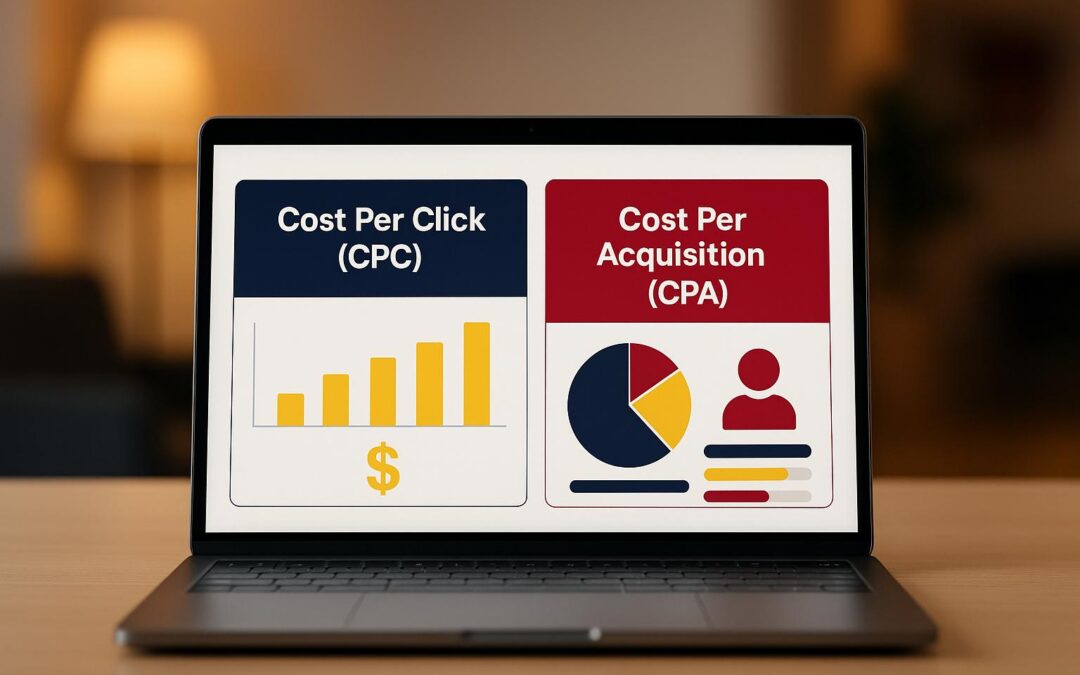
CPC (Cost Per Click) and CPA (Cost Per Acquisition) are two different ways to measure and pay for online advertising. Here’s a quick breakdown:
CPC: You pay every time someone clicks on your ad. Best for driving traffic and building brand awareness. Formula: CPC = Total Spend ÷ Clicks Example: Spend $1,000 for 500 clicks = $2 per click. Good for: New products, awareness, and campaigns without conversion data.
CPA: You pay only when a specific action (like a sale or lead) happens. Best for revenue-focused campaigns. Formula: CPA = Total Spend ÷ Conversions Example: Spend $5,000 for 50 sales = $100 per acquisition. Good for: Established sales funnels and ROI-driven goals.
Quick Comparison
Aspect
CPC
CPA
Payment Trigger
Per click
Per conversion
Focus
Traffic and visibility
Revenue and conversions
Risk Level
Lower
Higher
Best For
Awareness, new campaigns
Sales, lead generation
If you’re just starting, CPC helps test and gather data. For proven campaigns, CPA ensures you’re paying for results.
CPC and CPA Basics
CPC: Cost Per Click Explained
CPC, or Cost Per Click, is the amount you pay each time someone clicks on your ad. It’s a great choice if your goal is to increase traffic or build brand awareness. With CPC, you’re only charged when someone actively interacts with your ad.
Formula: CPC = Total Spend ÷ Clicks
Example: If you spend $1,000 and get 500 clicks, your CPC would be $2.00 ($1,000 ÷ 500 = $2.00).
CPC bidding offers several advantages:
Adjust your budget as needed in real time
Maintain control over spending
Monitor the quality of the traffic you’re attracting
Scale campaigns based on performance
Now that we’ve covered CPC, let’s dive into CPA and see how it differs.
CPA: Cost Per Acquisition Explained
CPA, or Cost Per Acquisition, measures how much it costs to achieve a specific conversion, like a sale or lead. Unlike CPC, which focuses on clicks, CPA tracks the entire process – from the first interaction to the final conversion.
Formula: CPA = Total Spend ÷ Acquisitions
Example: If you spend $5,000 and generate 50 sales, your CPA would be $100 ($5,000 ÷ 50 = $100).
Tracking CPA provides key benefits:
Directly measure your return on investment (ROI)
Understand the steps customers take before converting
Identify which segments or audiences are the most profitable
Focus on optimizing for revenue
Here’s a quick comparison of CPC and CPA to help you understand their differences:
Aspect
CPC
CPA
Payment Trigger
Ad click
Completed conversion
Primary Focus
Driving traffic
Generating revenue
Risk Level
Lower
Higher
Budget Control
Predictable
Depends on conversion rates
Best For
Awareness, promotion
Sales, lead generation
Up next, we’ll take a closer look at how these metrics compare side by side to help you decide which is right for your goals.
CPC vs CPA: Which Google Ads Bidding Strategy is Best?
CPC vs CPA: Main Differences
CPC and CPA are two distinct advertising models, each tailored to different goals and strategies.
Side-by-Side Comparison
CPC emphasizes generating clicks, while CPA focuses on completed conversions. According to the 2024 Digital Marketing Trends Report, 68% of brand-awareness campaigns rely on CPC, whereas 72% of ROI-driven campaigns lean on CPA.
Attribute
CPC (Cost-Per-Click)
CPA (Cost-Per-Acquisition)
Payment Trigger
Each click
Completed conversion action
Average Cost
$1.50–$3.00 per click
$20–$100+ per acquisition
Risk Level
Higher risk
Lower risk
Setup Time
Quick setup
More complex setup with tracking
Campaign Focus
Traffic and visibility
Revenue and conversions
Budget Control
Predictable costs
Performance-based costs
Best For
New products, awareness
Established sales funnels
Tracking Needs
Basic click tracking
Advanced conversion tracking
Key Operational Differences
The way these models are set up and managed varies greatly:
CPC setup involves keyword research, creating ad copy, and managing bids. It’s relatively straightforward but focuses on driving traffic.
CPA setup requires more effort. This includes setting up conversion tracking, optimizing sales funnels, using advanced analytics, and implementing tracking pixels.
Experts often recommend starting with CPC to build initial traffic and validate conversion paths. Once those paths are proven, transitioning to CPA can maximize returns.
Industry-Specific Insights
Costs and performance metrics differ across industries. For example:
Legal services: Average CPC is around $3.00, while CPA averages $86.02.
E-commerce: CPC typically ranges near $1.50, with CPAs between $20 and $50.
These variations highlight the importance of choosing the right metric based on your business stage and goals.
Common Pitfalls and Platform Strategies
A study in Texas revealed that 40% of small businesses overspend due to mismatched metrics and objectives. To address this, platforms like Google Ads and Meta Ads offer tools tailored to these models:
Google Ads: Features strategies like “Maximize Clicks” for CPC and “Target CPA” for conversion-focused campaigns.
Meta Ads: Provides advanced audience targeting but requires extra setup for CPA campaigns.
For companies with established tracking and proven sales funnels, CPA is often the better choice. On the other hand, businesses launching new products or focusing on brand awareness typically benefit more from CPC.
sbb-itb-8d6282e
Choosing Between CPC and CPA
When to Use CPC
Launching a New Product CPC is ideal for driving traffic and building awareness during a product launch. It prioritizes visibility over immediate sales.
Building Brand Awareness If your goal is to strengthen your market presence, CPC allows for precise budget control while offering benefits like:
Targeting industry-specific keywords
Managing daily budgets with ease
Quickly testing ad performance
Limited Conversion Data CPC is a smart choice when you lack historical conversion data. This applies to new websites, recently created landing pages, or products with longer sales cycles. On the other hand, CPA is more effective when you already have a defined conversion process.
When to Use CPA
Established Sales Funnels If your sales funnel is well-optimized and tested, CPA can help you track ROI more effectively. It’s a great fit for:
E-commerce stores with proven product lines
Service businesses with reliable lead generation systems
Companies with historical conversion data to guide decisions
Focusing on Specific Actions CPA is best when your campaign is designed to achieve particular outcomes rather than just increasing traffic. It works well for:
Generating leads
Driving direct sales
Encouraging app installations
Growing newsletter signups
Managing Costs and Risks For businesses with limited budgets or strict ROI goals, CPA offers better cost control by focusing on conversions. It’s particularly useful for:
Testing new markets
Scaling campaigns that are already performing well
Keeping customer acquisition costs in check
Campaign Goal
Recommended Metric
Key Consideration
Market Entry
CPC
Drive initial traffic and visibility
Lead Generation
CPA
Prioritize qualified conversions
Brand Awareness
CPC
Maximize exposure and reach
Direct Sales
CPA
Focus on purchase completions
Product Launch
CPC
Generate early interest
Funnel Optimization
CPA
Measure conversion effectiveness
Your decision should align with your business goals, industry requirements, and specific campaign objectives.
Selecting Your PPC Campaign Metric
Match Metrics to Business Goals
Choosing between CPC (Cost-Per-Click) and CPA (Cost-Per-Acquisition) depends on your campaign’s objectives. CPC is better suited for early-stage goals like increasing brand awareness or educating your audience. On the other hand, CPA works well for driving conversions and achieving results at the bottom of the sales funnel.
Here are some key considerations when deciding:
Campaign Maturity:
For new campaigns, CPC helps gather baseline data.
Established campaigns often perform better with CPA, which focuses on conversions.
Historical Data:
If you’re working with limited data, start with CPC testing.
If you have a strong history of conversions, CPA can be optimized more effectively.
Once you’ve matched your metric to your goals, it’s time to evaluate the financial impact and risks involved.
Cost and Risk Analysis
Understanding the costs and risks tied to each metric is essential for making informed decisions.
CPC Risk Profile:
Offers predictable daily spending.
Provides real-time performance insights.
Works well for testing and refining your audience targeting.
CPA Risk Profile:
Spending is based on performance, making it results-focused.
Has the potential for higher ROI but requires a proven conversion process.
Risk Factor
CPC
CPA
Budget Control
Fixed daily limits
Based on performance
Initial Investment
Predictable costs
Variable spending
Performance Data
Immediate metrics
Relies on conversions
Scaling Potential
Limited by click costs
Driven by conversion value
Campaign Progress and Tracking
Knowing when to transition from CPC to CPA is critical. Keep an eye on these indicators:
Stable conversion rates over a 30-day period.
Consistent and clear acquisition costs.
Reliable funnel performance metrics.
A sufficient volume of daily conversions to work with.
What to Track:
Conversion rates segmented by traffic source.
Trends in CPA performance.
Customer lifetime value (CLV).
Return on ad spend (ROAS).
These metrics will help you fine-tune your campaigns and decide when it’s time to shift strategies.
Conclusion
Our analysis of CPC and CPA highlights the distinct advantages each metric offers, making the choice critical for PPC campaign success. CPC provides predictable costs and quick insights, while CPA focuses on conversions and maximizing return on investment.
Client experiences back up these findings:
“More than a simple agency, CS Digitall know how to bring the results, we hired 3 agencies before but nothing like them.” – Jessica, Excellence Remodeling
This feedback shows how selecting the right metric can significantly improve campaign results. For new campaigns, CPC helps establish a strong data foundation with minimal risk. Once conversion rates are consistent, CPA can take optimization to the next level.
“Excellent agency, they don’t only manage my ads but help me to build up my CRM and train my sales team to use it.” – Flavio Torres, Suntek Lawn Care
These examples demonstrate the importance of aligning metrics with your business goals. By monitoring performance, you can use CPC to gain traction early on and shift to CPA to drive stronger returns as your campaigns mature.
FAQs
How can I decide whether to focus on CPC or CPA for my advertising campaign?
Choosing between Cost-Per-Click (CPC) and Cost-Per-Acquisition (CPA) depends on your campaign goals and budget. If your goal is to drive traffic to your website and increase visibility, CPC is a better fit since you only pay when someone clicks on your ad. On the other hand, if your focus is on conversions, like sales or sign-ups, CPA is more effective as it tracks the cost of acquiring a specific action.
Consider your campaign’s objectives and metrics. For example, if you’re launching a new product and want to attract as many visitors as possible, CPC might be the way to go. However, if you’re optimizing for ROI and need measurable results, CPA can provide a clearer picture of your ad performance. Balancing both metrics strategically can help maximize your PPC campaign’s success.
What are the main pros and cons of using CPC versus CPA in PPC campaigns?
When deciding between Cost-Per-Click (CPC) and Cost-Per-Acquisition (CPA) for your PPC campaigns, it’s important to weigh their advantages and drawbacks based on your goals.
CPC is ideal for driving traffic to your website, as you pay for each click. It offers greater control over your budget and is easier to track, but it doesn’t guarantee conversions – your costs can add up quickly if clicks don’t lead to sales or leads.
CPA, on the other hand, focuses on paying only for actual conversions, such as purchases or sign-ups. While this can be more cost-effective for driving results, it may require higher upfront investment and optimization efforts to achieve your desired outcomes.
The best choice depends on your campaign objectives: use CPC to build awareness and website traffic, and CPA to maximize ROI through conversions.
Can I transition from CPC to CPA in my campaign, and what effects will it have on my advertising strategy?
Yes, you can switch from Cost-Per-Click (CPC) to Cost-Per-Acquisition (CPA) once your campaign is established. This transition often requires sufficient campaign data, as CPA bidding relies on historical performance to optimize for conversions effectively.
Switching to CPA can shift your focus from driving traffic to achieving specific actions, like purchases or sign-ups. While CPC is ideal for generating clicks and increasing visibility, CPA prioritizes maximizing return on investment by targeting users more likely to convert. Ensure your campaign has enough conversion data before making the switch to achieve the best results.
Local citation building is the process of ensuring your business’s Name, Address, and Phone number (NAP) is accurately and consistently listed across the web. These mentions appear on platforms like business directories, social media, or industry-specific sites. They help search engines verify your business’s legitimacy and improve its visibility in local search results.
Why It Matters:
Boost Local SEO: Accurate citations improve rankings in "near me" searches.
Build Trust: Consistency across platforms enhances credibility.
Attract Customers: Helps local users find and contact your business easily.
Unstructured: Casual mentions in blogs, news articles, or social media.
Quick Tips:
Keep your business details consistent everywhere.
Focus on key platforms like Google, Bing, and Yelp.
Regularly audit and update your listings to maintain accuracy.
Citations are a simple yet powerful way to improve your local presence and connect with more customers.
Local Citations Explained
Every local citation should include your Name, Address, and Phone number (NAP). Keeping this information consistent across all online platforms is key to improving your local search visibility.
Local citations often also feature:
Your business website URL
Operating hours
Business categories
Consistency is critical. For example, if your address is listed as "123 Main Street, Suite 100", it needs to appear exactly like that on every platform. Avoid variations like "123 Main St. #100", as even small differences can create confusion for search engines.
Now, let’s break down the two main types of citations that impact local SEO.
Structured vs. Unstructured Citations
Local citations come in two main forms, each playing a specific role in your SEO efforts:
Structured Citations These are formal business listings found in online directories such as Google Business Profile or Yelp. They follow a set format and always include full NAP details.
Unstructured Citations These are casual mentions of your business in various online contexts. You might find them in:
Blog posts
News articles
Social media updates
Unlike structured citations, unstructured ones may not always include complete NAP details. However, they still boost your online presence by showing that your business is being referenced.
Citation Type
Format
Common Locations
Structured
Standardized fields
Business directories and listing sites
Unstructured
Natural mentions
Blogs, news articles, and social media posts
Both structured and unstructured citations work together to strengthen search engines’ trust in your business, making it easier for local customers to find you.
Local Citations and SEO Performance
Local citations play a key role in boosting search engine rankings when trusted sources display accurate business details. These citations shape how search engines perceive and present your business to local customers.
Search Result Rankings
Accurate and consistent citations can significantly improve local search rankings by:
Search Engine Verification When your business information is consistent across well-known platforms, search engines are more likely to:
Include your business in local pack results
Display your listing for "near me" searches
Rank your business higher for location-specific queries
Geographic Relevance Uniform citations make it clear where your business operates, reinforcing your connection to the local area.
Local Search Signals A strong citation profile – one with consistent, high-quality, and numerous listings – signals trustworthiness and local authority to search engines.
These improvements in rankings often lead to greater customer confidence in your business.
Business Credibility
Citations do more than just improve rankings – they also enhance your business’s credibility. When your information is consistently listed across trusted platforms, it strengthens your digital reputation.
Citation Factor
Impact on Credibility
Consistency
Ensures accurate information across platforms
Quantity
Highlights an established presence in the local area
Quality
Reflects authority through reliable directories
Online Visibility Citations also serve as key touchpoints for customers, helping them:
Confirm your business hours
Find directions to your location
Access your contact details easily
sbb-itb-8d6282e
Steps to Build Local Citations
Start by creating listings on key platforms:
Primary Platforms
Google Business Profile (previously Google My Business)
Choose platforms that align with your business type and location. For example, restaurants should focus on Yelp and TripAdvisor, while service businesses might prioritize Angi or HomeAdvisor.
Keep Business Information Consistent
After your listings are live, ensure your business details are consistent everywhere:
Information Type
Example Format
Common Mistakes to Avoid
Business Name
"Main Street Cafe"
Using variations like "Main St. Cafe"
Address
"123 Main Street, Suite 100"
Mixing "St." and "Street"
Phone Number
"(555) 123-4567"
Using different area codes or formats
Website URL
"www.example.com"
Switching between HTTP and HTTPS
Business Hours
"Mon-Fri: 9:00 AM – 5:00 PM"
Inconsistent time formats
NAP Consistency Tips
Use the same spelling and formatting across all platforms.
Always include suite numbers and building details in the same way.
Keep phone number punctuation identical.
Standardize business hours for clarity.
Regularly Check and Update Citations
After setting up your listings, routine audits are essential for maintaining strong local SEO:
Monthly Citation Audit
Review listings for changes or errors, such as unauthorized edits.
Update information for seasonal hours or temporary closures.
Confirm contact details remain accurate.
Tools for Managing Citations
Use citation monitoring tools to track changes.
Set up alerts for edits you didn’t authorize.
Monitor performance metrics to gauge effectiveness.
Keep a record of all updates to ensure consistency.
Always update your Google Business Profile first before making changes on other platforms to keep everything aligned.
Benefits for Small and Medium Businesses
Local citations do more than just improve search rankings – they help businesses build trust and attract more customers. By enhancing your visibility and credibility, citations can directly impact your local market presence and customer engagement.
Connect with Local Customers
Accurate and consistent citations make it easier for local customers to find and interact with your business. They act as multiple points of contact, strengthening your local presence and making your business more accessible.
Here’s how they help:
Better Visibility: Your business appears more frequently in local searches when customers are looking for your services.
Easier Access: Customers can reach you through various channels like phone, email, or visiting your physical location.
Increased Trust: Consistent and accurate information across platforms reassures customers about your legitimacy.
Drive Business Growth
Keeping your citations consistent and up-to-date can lead to better local search rankings, more foot traffic, and increased revenue. It’s a simple yet effective way to reinforce your presence and support long-term growth.
Key outcomes include:
Improved Search Rankings: Better local search visibility means more organic traffic.
More Foot Traffic: Accurate citations encourage more people to visit your store or office.
Sustained Growth: A strong local presence helps your business thrive over time.
Citation Aspect
Direct Advantage
Business Impact
Consistency
Boosts local search visibility
Drives more organic traffic
Completeness
Improves customer experience
Leads to higher conversions
Regular Updates
Keeps your business relevant
Supports ongoing growth
Maintaining accurate and consistent citations is a simple yet powerful way to strengthen your local SEO and grow your business.
Conclusion
Local citation building is a powerful tool for small and medium businesses aiming to boost their local SEO. By ensuring your business information is accurate and consistent across various platforms, you not only improve visibility in local search results but also build trust with potential customers.
But citations do more than just improve rankings. Keeping your NAP (Name, Address, Phone) details consistent across directories creates a dependable digital presence. This consistency signals credibility to both search engines and customers, which can directly enhance your local search performance.
For small and medium businesses, focusing on citation building offers several key advantages:
Customer Growth: A strong local presence helps attract and retain customers.
Expanded Reach: Placing citations strategically increases your online visibility.
Standing Out Locally: Well-maintained citations make your business more competitive in local markets.
The real success in citation building comes from staying accurate and proactive. Regularly updating and monitoring your business details ensures you remain visible and accessible to local customers. This effort creates a strong foundation for growing your market presence and improving search engine performance.
As competition grows in the local digital space, prioritizing citation management can set your business up for long-term success.
FAQs
How can I keep my business’s NAP details consistent across all platforms?
To ensure your business’s Name, Address, and Phone number (NAP) details remain consistent across all platforms, start by maintaining a single, accurate reference document with your business’s correct information. Use this as the source when updating your details on directories, websites, and social media profiles.
Regularly audit your listings on major platforms like Google Business Profile, Yelp, and local directories to ensure accuracy. Inconsistencies can confuse customers and harm your local SEO rankings. If you find discrepancies, update them promptly to maintain trust and improve visibility in search results.
What are the advantages of using both structured and unstructured citations for local SEO?
Focusing on both structured and unstructured citations can significantly boost your local SEO efforts by improving your business’s visibility in local search results.
Structured citations refer to consistent mentions of your business’s name, address, and phone number (NAP) on directories like Yelp, Google Business Profile, or Yellow Pages. These help search engines verify your business information, ensuring accuracy and trustworthiness.
Unstructured citations, on the other hand, are mentions of your business on websites, blogs, or social media platforms that may not follow a formal directory format. These citations can help build credibility and reinforce your presence within your local community.
By maintaining both types of citations, you increase your chances of ranking higher in local search results, attracting more potential customers, and driving traffic to your business.
How often should I review and update my local citations to keep them effective?
To maintain the effectiveness of your local citations, it’s a good idea to review and update them at least once every 6 to 12 months. Regular audits ensure your business information, such as name, address, phone number (NAP), and website, is accurate and consistent across all platforms.
Frequent updates are especially important if you’ve recently changed any business details, like relocating, updating your phone number, or rebranding. Keeping your citations up-to-date helps improve your local SEO performance and ensures potential customers can easily find and trust your business.
Voice search is changing how people find businesses in 2025. To stay visible, businesses must adapt their SEO strategies for conversational, question-driven queries. Here’s what you need to know:
Voice vs. Text Search: Voice queries are longer, conversational, and often local (e.g., "Where’s the best pizza near me?"). Text searches are shorter and keyword-based.
AI Tools for SEO: AI uses Natural Language Processing (NLP) to analyze how people speak, identify trends, and optimize for voice queries.
Local Optimization: Add location details like "near me" or "open now" to your content and business listings.
Quick Answers: Structure content to provide short, direct responses to questions.
Technical Setup: Improve website speed, mobile usability, and use schema markup for better voice search results.
Quick Tip: Update your business listings and use AI tools to monitor trends. This ensures your content aligns with how people use voice search today.
To stay ahead in SEO for 2025, it’s essential to understand how voice search differs from text search. These conversational search patterns require specific optimization strategies.
Voice vs. Text Search Patterns
Here’s how voice and text search queries differ:
Search Type
Example Query
Key Characteristics
Text Search
"best pizza Austin"
Short and keyword-based
Voice Search
"Where can I find the best pizza near me that’s open right now?"
Conversational, detailed, and often question-driven
Voice searches are structured more like natural conversations, while text searches tend to focus on concise keywords. With advancements in natural language processing (NLP), voice queries are now interpreted as full questions. This shift means businesses need to optimize content to directly address these conversational queries.
Local Search in Voice Queries
Voice searches often emphasize local intent, which shapes the way people ask questions. Here’s a breakdown of common patterns and their implications:
Query Type
Common Phrases
Business Impact
Location-Based
"near me", "in downtown", "within walking distance"
For example, a restaurant in Austin could optimize its content to answer voice queries like, "Where can I find a family-friendly Italian restaurant in downtown Austin that’s open for lunch?"
To succeed, businesses must go beyond keywords and focus on providing direct, clear answers to the specific questions their audience is asking. By addressing natural language patterns and local search needs, companies can position themselves to attract more voice search traffic in their area. Accurate and up-to-date local details in digital listings are crucial for this strategy.
Using AI for Voice Search Keywords
AI tools play a key role in improving voice search SEO by identifying relevant voice queries and helping structure content to match these searches effectively.
Finding Voice Search Keywords with AI
AI tools use natural language processing (NLP) to analyze conversational queries and identify patterns in voice search. They focus on specific types of queries, such as:
Query Type
AI Analysis Focus
Optimization Goal
Question-Based
Keywords like Who, What, Where, When, Why, How
Providing direct answer snippets
Conversational
Natural phrases and dialog patterns
Optimizing for featured snippets
Local Intent
Location-specific terms
Boosting local business relevance
Long-tail
Detailed, multi-word phrases
Matching specific user intent
For example, instead of optimizing for "pizza delivery Austin", aim for something more conversational like, "where can I order pizza delivery in north Austin right now?"
After identifying the key voice search queries, the next step is to create content that answers these questions directly and clearly.
Writing Content for Voice Search
Voice search content needs to be structured around concise, conversational answers that directly address user questions.
Content Element
Traditional Approach
Voice-Optimized Approach
Headers
Focused on keywords
Framed as questions
Answer Format
General explanations
Short, direct responses
Content Length
Long paragraphs
Brief and to the point
Language Style
Formal and technical
Natural and conversational
For example, local businesses can use FAQ sections to address common voice search queries like:
"We’re open Monday through Friday from 9 AM to 6 PM Eastern Time, with extended hours until 8 PM on Thursdays."
"Yes, we typically have same-day appointments available if you book before 2 PM local time."
Including location-specific details is crucial, as many voice searches have a local focus. For Austin businesses, mention neighborhood names or landmarks that resonate with how locals describe the area. Additionally, implementing schema markup can help improve visibility in voice search results.
sbb-itb-8d6282e
Local SEO Tips for Voice Search
Boost your local voice search rankings by leveraging AI tools to improve your business’s visibility. These strategies build on earlier keyword practices, tailoring them for voice search to help you stand out.
Setting Up Business Listings
Accurate business listings are key to being discovered through voice search. AI tools can help ensure your information is consistent across platforms:
Element
Why It Matters
How AI Helps
Business Name
Acts as the main ID
Ensures consistency
Address Format
Ensures location accuracy
Standardizes formatting
Hours of Operation
Provides correct info to users
Verifies and updates schedules
Service Categories
Improves search relevance
Suggests proper categories
Business Description
Matches search queries
Enhances with natural language
Pay attention to these details to align with how people phrase voice queries.
Managing Online Reviews
Online reviews not only enhance your credibility but also play a role in improving local voice search rankings. Here’s how to make the most of them:
Respond to Reviews Quickly: Use AI tools to monitor reviews and reply promptly, showing you value customer feedback.
Encourage Reviews: Automate requests for reviews after providing a service. AI tools can also help analyze customer sentiment.
Optimize Review Content: Encourage customers to include localized keywords in their reviews. AI can identify trends and suggest ways to improve.
These steps ensure your reviews remain a strong asset for improving visibility in local voice searches.
Technical Setup for Voice Search
Optimizing for voice search requires specific technical configurations to ensure your website ranks well and delivers a seamless experience for users. Let’s break it down.
Website Speed and Mobile Setup
The speed of your website plays a critical role in voice search performance. Faster sites not only improve user experience but also align with the quick-response nature of voice searches. Here’s a closer look at some key factors:
Speed Factor
Impact on Voice Search
Solution
Page Load Time
Improves user experience
Use real-time performance monitoring
Mobile Response
Benefits users by ensuring mobile usability
Apply adaptive image compression
Server Response
Boosts overall website performance
Automate CDN optimization
Resource Loading
Speeds up interactions
Use smart resource scheduling
For mobile optimization, focus on these areas:
Responsive Design: Ensure your site adapts to various screen sizes for a smooth experience.
Image Compression: Compress images to reduce file sizes without sacrificing quality.
Content Delivery: Use a content delivery network (CDN) to serve content from servers closest to your users.
Schema Markup for Voice Search
Schema markup is essential for helping voice assistants interpret and present your content accurately. The right schema can make your site more accessible to voice queries. Here’s how different schema types can help:
Schema Type
Purpose
Voice Search Benefit
LocalBusiness
Shares business details
Ensures users get accurate location info
FAQPage
Lists frequently asked questions
Provides direct answers to common queries
HowTo
Offers step-by-step instructions
Makes guides easier to follow via voice
Product
Describes product details
Supplies specific product information
Steps to implement schema markup effectively:
Use tools to identify which schema types suit your content.
Add structured data for your most critical pages (e.g., FAQs, product pages).
When creating schema markup, keep natural language in mind – voice queries are often conversational. To further enhance your schema, include:
Complete business details (name, address, phone number)
Accurate hours of operation
Clear service descriptions
Precise location and pricing information
Next Steps for Voice Search SEO
Take practical steps to strengthen your voice search presence for 2025.
Blend AI tools with established SEO techniques to maintain consistent visibility over time. Concentrate on these key areas:
Priority Area
Action Items
Expected Impact
Content Strategy
Develop conversational content that addresses specific questions
Better rankings in voice search
AI Integration
Leverage AI tools for keyword research and content refinement
Increased search relevance
Local Presence
Optimize business listings and location-specific content
Stronger local voice search results
Performance Tracking
Track voice search metrics and user activity
Smarter, data-informed adjustments
Consistently applying these strategies can help you weave voice search SEO into your broader marketing efforts.
To build trust with your audience, ensure your content is concise, regularly updated, and tailored to evolving voice search trends. This involves staying on top of changing patterns in voice queries and using performance data to make continuous improvements. A data-driven approach like this keeps your strategy effective as user habits and technology evolve.
Need expert help? Reach out to CS Digitall for assistance in integrating these voice search strategies into your marketing plan. Whether you’re looking for a "marketing agency near me" or "digital marketing advertising agencies" in Austin, CS Digitall is here to help you optimize your voice search presence.
: Small and medium companies should focus on strategies that work for their business and connect with the right audience at the right time and place.
FAQs
What are the best ways to use AI tools for optimizing content for voice search in 2025?
AI tools can significantly enhance your voice search optimization by tailoring content to how people naturally speak. To get started, focus on these key strategies:
Use conversational language: Voice search queries are often phrased as questions or complete sentences. Structure your content to include natural, question-based phrases.
Target long-tail keywords: Voice searches tend to be more specific. Incorporate detailed, long-tail keywords into your content to match user intent.
Leverage AI-driven insights: Tools like AI-powered keyword analyzers can identify trending voice search terms and user behaviors, helping you refine your strategy.
By combining these techniques, small businesses can improve their visibility in voice search results, making it easier for potential customers to find them.
How can local businesses optimize for voice searches based on location?
To succeed with location-based voice searches, local businesses should focus on maintaining accurate and detailed online information. Start by fully optimizing your Google Business Profile, ensuring your address, phone number, and business hours are correct and up-to-date.
Encourage customers to leave positive reviews, as these can boost your credibility and influence rankings in voice search results. Additionally, implement local SEO strategies by using location-specific keywords in your website content and building consistent local citations across directories.
For businesses needing expert guidance, working with professionals like CS Digitall can help you craft tailored strategies to enhance visibility and attract more local customers.
What is schema markup, and how does it enhance voice search SEO and visibility in search results?
Schema markup is a type of structured data that helps search engines better understand the content on your website. By providing additional context, such as product details, business hours, or FAQs, schema markup makes your site more accessible for voice assistants like Alexa, Siri, or Google Assistant to deliver accurate answers to user queries.
Using schema markup improves your chances of appearing in rich results, such as featured snippets, which are often prioritized in voice search. For small businesses, this means better visibility, more traffic, and a higher likelihood of connecting with local customers searching for services you offer.